
 Image 1 of 2
 Image 2 of 2
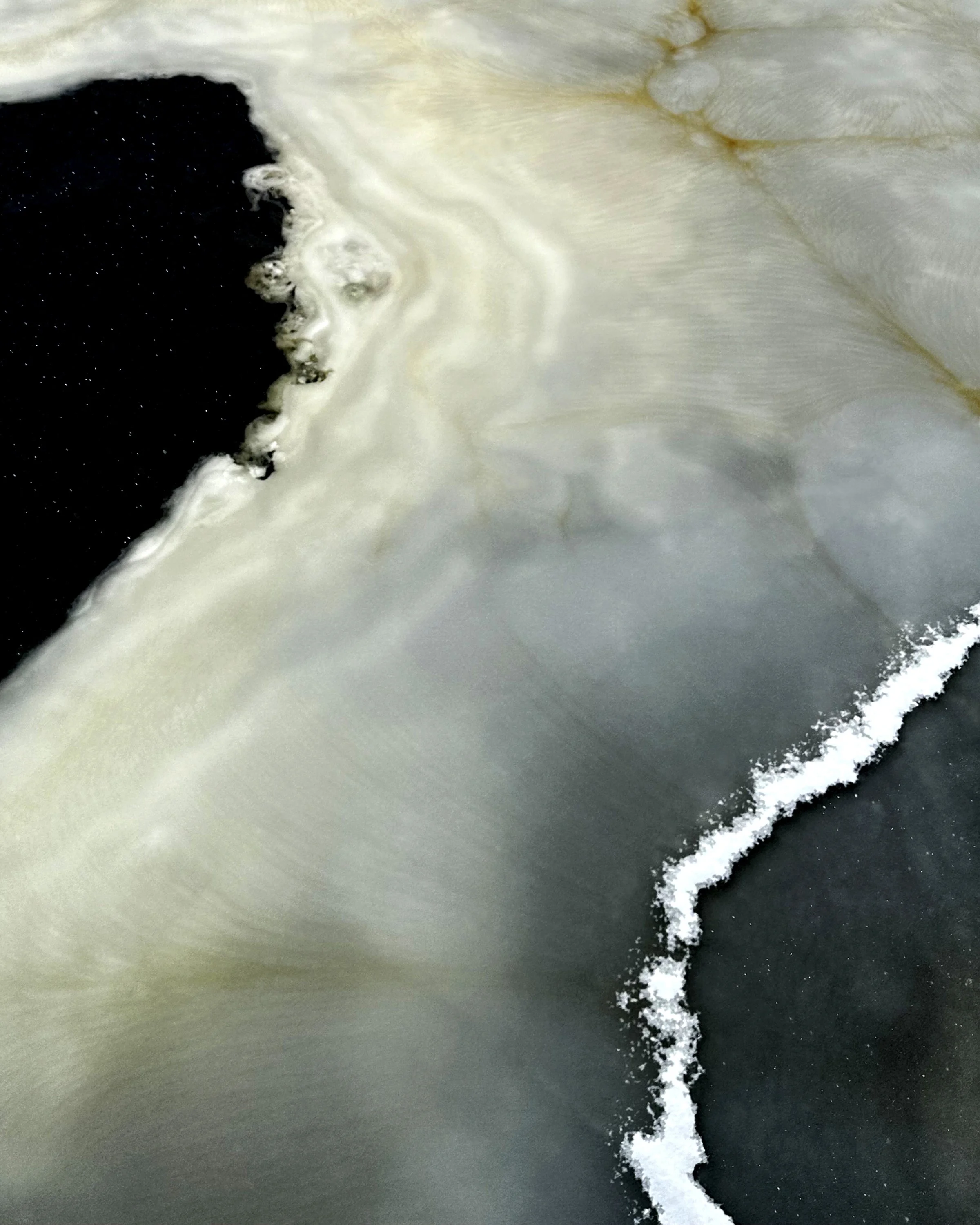
In that single frame — frost, cracked ice, trapped bubbles, and a bend of river light — my mind discovered a face: a sleepy eye and a wry toothy smile. That fleeting recognition is pareidolia: a bridge between pattern and meaning, where random textures become story. I began to seek those moments intentionally, walking my dog along the river with patience and a camera, learning to wait for the accidental alignments.
Some photos show clear, human-like features; others simply hint at forms that prompt memory or myth. Together they trace how landscape and imagination meet — how Tenàgàdino Zìbì, in its ice and flow, offers not only geology and water but a theatre for the mind.
The series PATTERNS & PAREIDOLIA invites the viewer to take time and pause at a cracked patch of ice and you might see something spectacular. Those encounters are small miracles: reminders that the world contains layers of pattern ready to be read, and that our own perception is always shaping the scenes we think we find.
In that single frame — frost, cracked ice, trapped bubbles, and a bend of river light — my mind discovered a face: a sleepy eye and a wry toothy smile. That fleeting recognition is pareidolia: a bridge between pattern and meaning, where random textures become story. I began to seek those moments intentionally, walking my dog along the river with patience and a camera, learning to wait for the accidental alignments.
Some photos show clear, human-like features; others simply hint at forms that prompt memory or myth. Together they trace how landscape and imagination meet — how Tenàgàdino Zìbì, in its ice and flow, offers not only geology and water but a theatre for the mind.
The series PATTERNS & PAREIDOLIA invites the viewer to take time and pause at a cracked patch of ice and you might see something spectacular. Those encounters are small miracles: reminders that the world contains layers of pattern ready to be read, and that our own perception is always shaping the scenes we think we find.